The Epoch Times: Breaking News
- 4.8
- Rating
- 1.00M
- Installs
- Free
- Price

 Analysis by App-foxy
I usually judge a news app twice: first by how quickly it gives me something worth reading, and then by whether I still open it once the first-week curiosity has gone. The Epoch Times: Breaking News makes a clear impression early because it brings national coverage, China-related reporting, live news, opinion, and broader magazine-style reading into one place. It is a free News & Magazines app from Epoch Times Association Inc, rated for Everyone, and it has built a substantial audience with over a million installs and a 4.8 average from around 92 thousand ratings.
That strong first impression does not automatically make it the right daily news companion for everybody. In my experience, its lasting value depends on what I want from news: a distinct editorial viewpoint and a focused reading habit, or a wide-ranging, neutral-feeling overview assembled from many different outlets. I found the app most useful when I treated it as one deliberate source in my reading routine rather than as the only place I checked for important events.
What the first week feels like
During the first few days, the appeal comes from having several kinds of coverage gathered under one roof. I could move from current national stories to China coverage, then browse opinion pieces or look for live developments without switching between separate apps. That makes the app easy to understand: it is not trying to be only a wire-service headline feed, and it is not limited to commentary. It offers a mixture of timely reporting and perspective-driven reading.
You May Also Like

 Blood Strike: 2.5 Anniversary
Blood Strike’s Loadouts Turn Every Drop Into a Tactical Gamble
A close look at Blood Strike’s custom loadouts: how fast access to signature weapons reshapes its battle royale rhythm, rewards preparation, and narrows the gap between fights.

 Pandora - Music & Podcasts
Pandora’s Music Is Easy to Start, but Harder to Recover
Pandora’s strength is its low-effort path from a seed to a station. Its weak spot is how much confidence it asks you to place in connection, setup, and quiet recovery.

 8 Ball Pool
 Is Built on Rivalries, Rematches, and Routine
A close look at the rivalries, rematches, shared routines, and unanswered safety questions that turn a quick pool match into a persistent mobile community.

 Samsung Music
’s Quiet Strength Is Playing What You Already Own
Its reach comes less from spectacle than from dependable access to a personal library. That simplicity is both the app’s strongest retention engine and its ceiling.

 AccuWeather: Weather Radar
AccuWeather Review: A Quick, Clear Forecast for Everyday Decisions
For everyday plans, the best forecast is the one you can understand quickly. AccuWeather makes rain timing, radar, and local conditions easy to act on, with a few trade-offs.

 Hill Climb Racing
Why Hill Climb Racing Still Turns Crashes Into One More Run
A tiny car, a bumpy hill and one more upgrade: Hill Climb Racing keeps resurfacing because its simple chaos makes every near-miss feel personal.
More From Our News Desk



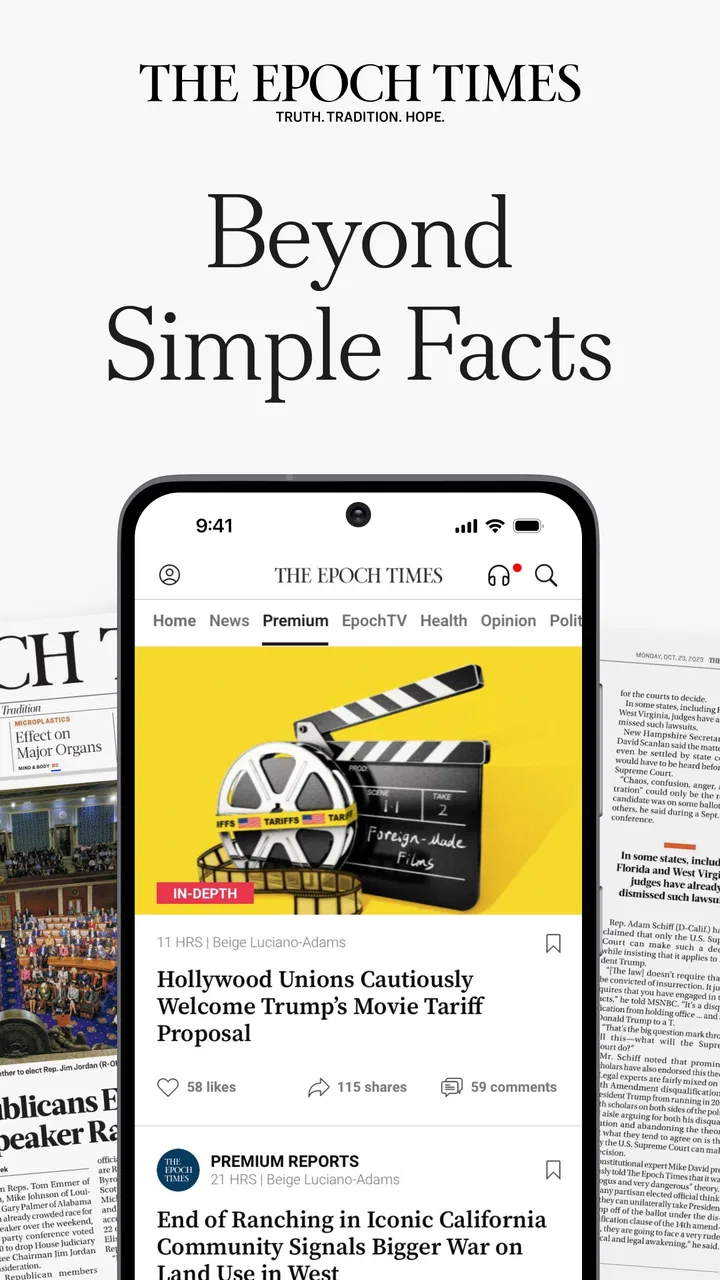
The short description is simply “The Epoch Times,” but the useful distinction is in the range of sections represented inside the product. The store summary points to National, China, Live & News, and Opinion, and those labels give a better idea of the reading experience than the name alone. If I am following a major political story, I can look at current reporting and then spend more time with analysis. If I am specifically interested in China-related news, the dedicated emphasis makes the app more relevant than a general headline aggregator.
What I noticed quickly is that this is a reading app rather than a replacement for every news tool on my phone. Its value comes from opening it with an intention: checking the latest developments, exploring a subject through its own editorial lens, or setting aside time for longer reading. I would not install it expecting a completely interchangeable stream of headlines from every major publisher.
A realistic everyday use case is a morning commute or a short break after lunch. I might open the app to scan the latest national headlines, read one China-related report in full, and save the opinion section for the evening when I have more attention. That routine works because the app supports different depths of reading. The important trick is not to treat every headline as equally urgent; I found it better to separate immediate news from pieces meant to be considered more slowly.
The app is also easy to approach if I prefer a single publication’s voice. Many news aggregators are useful for breadth but can feel fragmented, with different writing styles and repeated versions of the same event. Here, the experience is more coherent because the sections belong to the same publication. The trade-off is equally clear: coherence can make the reading experience feel more focused, but it also means I am not getting the same range of editorial approaches that I would find in an aggregator.
Its free entry point helps with experimentation. I can install it, read enough to understand the tone and coverage, and decide whether it deserves a regular place on my phone without paying at the door. At the same time, the app includes in-app purchases ranging from $7.99 to $155.99 per item. That makes it important to pay attention to the point at which casual reading might become a paid commitment. I would not assume that “free” means every part of the long-term experience is included without cost.
The current version is 3.1.11, and the app supports Android starting with version 5.0. That broad compatibility is useful if I am keeping an older Android phone in service. It also means the app is not limited to people using the newest hardware. Still, compatibility alone does not tell me whether the app feels equally comfortable on every device, so I would judge the day-to-day experience on my own screen rather than assuming an older phone will perform exactly like a newer one.
Who gets the most from the early experience
I think the strongest first-week audience is someone who wants a publication with a recognizable point of view, especially around national events, China, and opinion. It can also suit a reader who dislikes building a news routine from several unrelated apps. The combination of reporting and commentary gives that reader a clear place to begin each day.
On the other hand, I would be cautious if my priority were strict source comparison inside one feed. A person who wants headlines from many competing organizations, quick side-by-side confirmation, or a highly neutral aggregator may be better served by a mainstream news hub or a dedicated wire-service app. This app can be part of that broader routine, but I would not use one publication as my sole check on a complex or rapidly developing story.
What remains useful after the novelty fades
After the initial exploration, the real question becomes whether the sections continue to give me a reason to return. For me, the answer depends less on the number of available stories and more on whether the app matches a repeatable habit. National coverage can support a daily check-in, while the China section offers a more specific reason to return when that subject is central to my interests. Opinion adds another layer, but it serves a different purpose from breaking news and should be read with that distinction in mind.
The most durable workflow I found was to use the app in three passes. First, I scan the latest news for anything immediately relevant. Second, I choose one story that deserves context rather than just a headline. Third, I stop reading once I have reached the amount of information I actually need. That final step sounds simple, but it prevents a news app from turning every spare minute into an endless scroll.
The recurring value is strongest when I use the app as a focused editorial window, not as an all-purpose truth machine. That is a trade-off, not a criticism. A publication with a consistent voice can help me follow a subject over time, but I still benefit from checking other reputable sources when a story affects a decision, involves disputed claims, or is changing quickly.
Opinion content can be especially useful for readers who want interpretation rather than a bare event summary. I enjoy that kind of material when I already understand the basic facts and want to think about their implications. I would not substitute it for primary reporting when I am trying to establish what happened. Keeping those two reading modes separate is one of the best ways to get more value from the app without letting its viewpoint dictate my entire understanding of an issue.
The app’s China focus is another long-term differentiator. General news services may mention China when a major international event occurs, but a dedicated area can make it easier for an interested reader to follow the subject consistently. The limitation is that a focused section still represents the publication’s selection and framing. If I need a fuller international picture, I would pair it with sources from different regions and editorial traditions.
The size of the existing audience suggests that the app has become a regular destination for many readers, with around 15 thousand written reviews alongside its broader rating base. I take that as evidence that the product has staying power, but not as a substitute for deciding whether its editorial style fits me. A large audience can confirm that an app is established; it cannot make an individual news diet balanced by itself.
How it compares with ordinary alternatives
Compared with a general news aggregator, this app feels more consistent and less like a pile of duplicated headlines. That can make reading calmer because I am not jumping between unrelated layouts and writing styles. The downside is reduced variety in editorial presentation. An aggregator is usually better when my main goal is breadth, comparison, and discovering how different outlets cover the same event.
Compared with a short-form breaking-news feed, this app is more suitable for readers who want to move from an alert into a fuller article or opinion piece. A fast headline service may win when I only have seconds, especially during a developing emergency. This app makes more sense when I have enough time to read and reflect.
Compared with a newspaper subscription app, the free starting point is inviting, but the in-app purchase range means I should examine what I am being offered before committing to a paid option. A subscription-focused newspaper may provide a clearer long-term package for someone who already knows they want that publication every day. Here, I would begin casually and only pay if the continuing reading value feels specific and dependable.
The maintenance cost of keeping it in my routine
News apps require a different kind of maintenance from productivity or entertainment apps. The burden is not only updating the software; it is managing attention, deciding which sections deserve time, and preventing repeated checking from becoming a habit without purpose. With this app, I found that a simple schedule works better than opening it whenever I feel bored.
I would set one or two intentional reading windows and use the section structure to control them. A short morning scan can cover national and live news. A longer evening session can be reserved for China coverage or opinion. This approach keeps the app useful without allowing every new headline to interrupt the day. It also makes it easier to notice whether the publication is genuinely adding information or merely filling time.
Another practical habit is to verify important claims outside the app before acting on them. That does not mean the app has no value; it means news deserves a different standard when it affects health, money, travel, safety, or a major personal decision. I would use its reporting to identify what I need to investigate, then compare the most consequential details with other reliable sources.
The purchase model is part of maintenance too. Since individual in-app items can range from $7.99 to $155.99, I would review any purchase screen carefully and avoid assuming that a casual tap is the same as a one-time free feature. Readers who want a completely cost-free news routine should be especially deliberate here. The app can be tried for free, but a lasting plan may involve decisions about paid access.
For families, the Everyone age rating makes the app broadly approachable from an age-label perspective. That does not remove the need for parental judgment about political commentary or difficult current events. A child-friendly rating is not the same thing as content that every family will consider suitable for independent reading.
Where reading fatigue can appear
The first source of fatigue is viewpoint saturation. If I read only one publication for weeks, even a well-organized app can narrow my frame of reference. The consistent voice that makes the app comfortable at first may eventually make the feed feel predictable. I solve that by pairing it with at least one source that approaches national and international stories differently.
The second is the emotional weight of continuous news. Live coverage and opinion can encourage repeated checking, especially when a major story is unfolding. I found it healthier to decide what question I was trying to answer before opening the app. If I cannot name that question, I probably need a break rather than another refresh.
The third is the difference between information and interpretation. A strong opinion piece may be memorable, but it can also dominate my impression of an event if I read it before establishing the basic facts. My preferred order is reporting first, commentary second, and outside comparison when the subject is controversial or consequential.
There is also a practical fatigue that comes from paying for content without using it enough. Because the purchase range is wide, I would not upgrade simply because I enjoyed a few articles during the first week. I would wait until the app had earned a stable place in my monthly routine and I could identify exactly what the paid option added to my reading.
My long-term verdict
I would keep The Epoch Times: Breaking News installed if I wanted regular access to national reporting, China coverage, live news, and opinion from one publication with a distinct editorial identity. Its lasting strength is not novelty; it is the possibility of building a focused reading routine around those areas. The free entry point, Everyone rating, and support for Android 5.0 or later make it easy for a broad range of users to try.
I would not make it my only news source. Readers who value maximum neutrality, broad outlet comparison, or a purely headline-first experience may find a general aggregator or wire-service app more suitable. Likewise, anyone who dislikes opinion-led coverage may prefer an app that concentrates on concise reporting and leaves interpretation to the reader.
For me, the app earns long-term space when I use it deliberately: scan current events, follow subjects that genuinely matter to me, read commentary after the underlying news, and compare high-stakes claims elsewhere. Used that way, it becomes a useful part of a balanced news routine rather than an all-consuming feed.
My final recommendation is therefore conditional but positive. Try it if its national and China coverage matches your interests and you appreciate a consistent editorial voice. Give it a week, then ask whether you are returning for useful reporting or merely for the stimulation of new headlines. If the answer is useful reporting, it can become a dependable reading companion. If the answer is constant reaction without broader context, another news app—or a combination of several sources—will serve you better.
FAQs for The Epoch Times: Breaking News
01What is The Epoch Times app?
The Epoch Times app is a digital news platform offering breaking news, analysis, and in-depth reporting on current events worldwide. It covers topics ranging from politics and business to health and culture, providing users with a broad array of information. The app is designed for easy navigation and personalized news feeds.
02Is The Epoch Times app free to download and use?
Yes, The Epoch Times app is free to download on both Android and iOS devices. However, while some content is available for free, the app also offers premium content that requires a subscription. The subscription provides access to exclusive articles and detailed reports.
03What features does The Epoch Times app offer?
The Epoch Times app offers a user-friendly interface with features such as customizable news feeds, offline reading, and notifications for breaking news. It also includes video content and podcasts, allowing users to engage with news in various formats. The app's design supports easy sharing of articles on social media.
04How often is the content updated on The Epoch Times app?
The content on The Epoch Times app is updated continuously throughout the day, ensuring users have access to the latest news and developments. The app's team of journalists and editors work around the clock to provide timely and accurate reporting on global events as they unfold.
05What are some pros and cons of using The Epoch Times app?
Pros of The Epoch Times app include its comprehensive news coverage, user-friendly interface, and diverse content formats. However, some users might find the premium subscription requirement for certain content as a drawback. Additionally, the app might have a specific editorial perspective that not all users align with.
Pros
- User-friendly interface for easy navigation.
- Offers a wide range of news categories.
- Regularly updated with the latest news.
- Available offline for reading on the go.
- Customizable notifications for breaking news.
Cons
- Contains a significant amount of ads.
- Some articles may require a subscription.
- Limited multimedia content compared to competitors.
- Not all features are available in every region.
- Occasional app crashes reported by users.

The Epoch Times: Breaking News
Gallery